OT security for energy
Protect sites in many locations
Power grids, district heating and water supply have sites in many locations. These are often connected through shared networks or the internet. The equipment has to work for many years and can rarely be updated.
The situation
Why the energy sector is especially exposed
Many sites
Pumping stations, substations and other sites are spread out. Their network connection often runs through a shared network or the internet.
Long service life
The equipment has to work for decades. It is updated only when the vendor releases an update. Sometimes there are no updates at all.
Many vendors
Each system has its own manufacturer, its own service contract and its own need for remote access.
Legal requirements
Energy and water are sectors covered by NIS2, the EU's cybersecurity directive, and so by the Swedish Cybersecurity Act. Organisations that are covered must take measures for their cybersecurity.
How XoT helps
Protection for every site without rebuilding
Hide and Protect makes the equipment at a site invisible to everyone without authorisation. Anyone scanning the network from the internet finds nothing that responds.
Remote Access gives each vendor access to the equipment their contract covers. The vendor cannot move on to other sites.
Without XoT
The vendor connects by VPN to the operational network, the network that controls the site. From there, the traffic often goes through a jump server, a server that all remote access passes through. If the vendor is attacked, the attacker can reach several sites.
With XoT
The vendor is authorised for specific equipment. If the vendor is attacked, the attacker reaches only that equipment.
Remote stations
Protect remote stations that can control the SCADA system
Among other things, XoT is well suited to protecting remote stations. A remote station is far from the control centre but connected to the SCADA system. From the station, parts of the process can often be controlled.
That makes remote stations a possible way in for an attacker. Anyone who gets into one station can try to reach the SCADA system and the other stations.
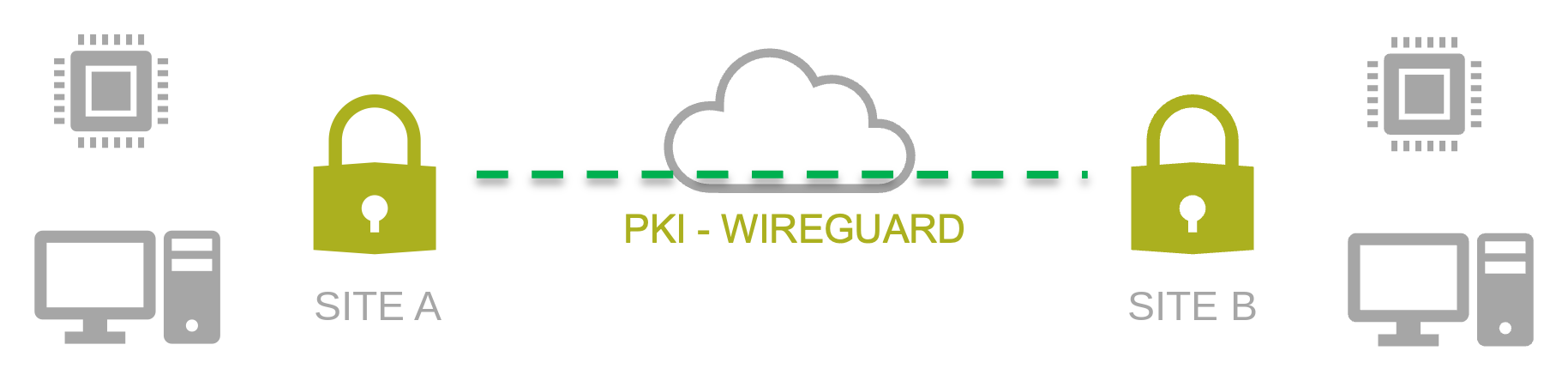
A Lock in every station
The Lock sits between the station's equipment and the network. The equipment in the station becomes invisible to anyone without authorisation.
An encrypted connection to the SCADA system
The Lock in the station opens an encrypted connection to a Lock at the SCADA system. Nothing needs to be installed on the station's equipment or in the SCADA system.
Only the traffic that is needed
A policy in the XMS decides which traffic may pass between the station and the SCADA system. All other traffic is stopped. The stations cannot reach each other unless a policy allows it.
Works over mobile networks
XoT works over any IP network, including mobile networks. The Lock can also be installed directly in Teltonika routers.
Regulation
The Cybersecurity Act applies to the energy sector
NIS2 is the EU's directive on cybersecurity. It has applied in Sweden through the Cybersecurity Act since 15 January 2026. Energy is one of the sectors the law covers.
The directive lists ten areas where organisations must take measures. We have reviewed which of them XoT helps with. You need more measures than XoT to comply with the law.
Customers
Energy companies already use XoT
We do not show our customers' names, because energy companies rarely want to say who their suppliers are. Would you like to talk to a customer? Then we will try to put you in touch.